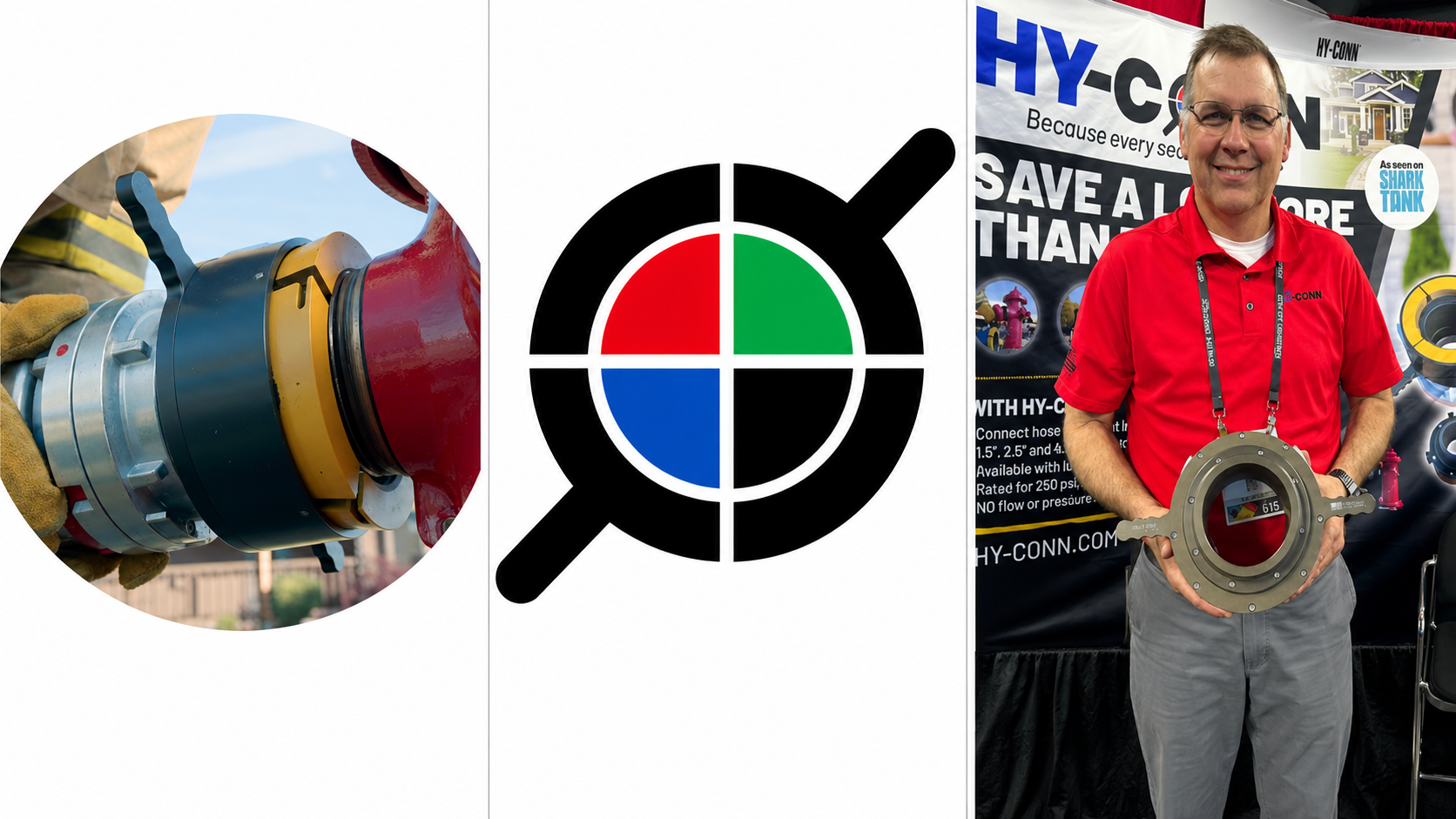
HyConn is a quick-connect equipment company founded by career machinist and volunteer firefighter Jeff Stroope. He developed the system to reduce the time needed to attach hoses to fire hydrants and other water connections. The product later expanded into industrial, municipal, military, and home-use applications.
Interest in HyConn net worth increased after Stroope’s memorable appearance on Shark Tank. Mark Cuban offered $1.25 million for complete ownership of the company, along with employment and royalty terms. However, the agreement changed during later discussions and never became a completed company sale.
Hy-Conn now maintains an active website promoting American-made products manufactured in Arkansas. This article examines the invention, its television exposure, the failed Cuban deal, manufacturing challenges, current commercial activity, and the financial information needed to estimate the company’s real value.
HyConn at a Glance
| Detail | Information |
|---|---|
| Company name | Hy-Conn LLC |
| Common search spelling | HyConn |
| Founder | Jeff Stroope |
| Founder’s background | Career machinist and volunteer firefighter |
| Industry | Firefighting equipment and quick-connect fittings |
| Main product | Rapid connectors for hydrants, hoses, and water-transfer systems |
| Known for | Appearing on Shark Tank Season 2 |
| Original funding request | $500,000 for 40% equity |
| Implied asking valuation | $1.25 million |
| Mark Cuban’s on-air offer | $1.25 million for 100% of the company |
| Deal status | The investment was not completed after the show |
| Current public status | An active website advertises Hy-Conn products |
| Current company valuation | Not publicly disclosed |
| Net worth verification | Online figures are estimates rather than audited values |
Stroope’s original request valued the company at $1.25 million because offering 40% for $500,000 implies that total valuation. Cuban’s separate $1.25 million offer proposed purchasing the entire business, but the transaction did not close. Neither amount establishes the present HyConn net worth.
What Is HyConn Net Worth?
The current HyConn net worth has not been confirmed through audited accounts, an acquisition record, a funding announcement, or an authoritative company filing. Hy-Conn is privately held, and its official website does not publish the revenue, profit, debt, cash flow, or ownership information needed to calculate a reliable valuation.
Some online articles estimate that the company is worth approximately $5 million. However, these figures are not supported by detailed financial statements or clearly identified valuation methods. Without verified sales, operating costs, inventory, liabilities, and ownership data, the estimate should not be treated as a confirmed figure.
The $1.25 million associated with HyConn came from its appearance on Shark Tank. Jeff Stroope initially requested $500,000 for 40% equity, while Mark Cuban later offered $1.25 million for complete ownership. The accepted television deal did not close, so it was neither a completed sale nor proof of the company’s present value.
A realistic private-company valuation would consider annual sales, profitability, patents, inventory, contracts, manufacturing capacity, debt, and growth potential. Until Hy-Conn releases dependable financial information, any exact HyConn net worth figure remains an estimate rather than an audited business value.
What Is HyConn and How Does Its Product Work?
HyConn produces quick-connect fittings designed to reduce the time required to attach hoses to threaded hydrants, outdoor faucets, and other water-transfer systems. Instead of repeatedly turning a traditional threaded connection, the user can secure a compatible fitting through a faster locking process.
Founder Jeff Stroope developed the idea through his experience as a career machinist and volunteer firefighter. He recognized that connecting a fire hose to a hydrant could consume valuable time, especially when responders were working under pressure. His machining knowledge helped him design a fitting intended to simplify that step.
The potential value is easy to understand in emergency settings. A quicker connection may allow firefighters to begin moving water sooner, although publicly available records do not establish how many departments use the system or how many emergency outcomes it has affected.
Hy-Conn currently promotes fittings for fire departments, municipalities, industrial operations, military bases, recreational vehicles, and residential hoses. These applications show how the original firefighting idea has been adapted for several types of water connections without proving a specific level of sales.
HyConn’s Shark Tank Pitch and Original Valuation
Jeff Stroope entered Shark Tank seeking a $500,000 investment in exchange for 40% ownership of HyConn. Dividing the requested investment by the equity offered produced an implied company valuation of $1.25 million at the time of the pitch.
Stroope demonstrated HyConn beside a traditional threaded hose connection, showing how quickly his fitting could attach to and disconnect from a hydrant. The visible difference attracted investor attention, especially after he revealed that the same basic idea could be adapted for household garden hoses.
Mark Cuban ultimately offered $1.25 million for full ownership of HyConn. The proposal also included a three-year employment agreement for Stroope and a percentage of the company’s future profits. Stroope accepted Cuban’s offer during filming instead of choosing a competing proposal focused on the consumer adapter.
The deal remains central to searches for HyConn net worth, but the numbers reflected negotiations at that particular moment. They did not prove that the company had $1.25 million in revenue, profits, or assets. The later collapse of the agreement also means the figure cannot be treated as HyConn’s completed sale price or current valuation.
Why Did the Mark Cuban Deal Fall Through?
The agreement accepted on Shark Tank did not become a completed investment. Like other televised deals, it remained subject to post-filming review, financial checks, legal work, and further negotiation before money or ownership could formally change hands.
Published accounts indicate that Cuban later preferred licensing HyConn’s technology to another manufacturer rather than building and operating the production process directly. Stroope reportedly wanted to remain closely involved with manufacturing and the company’s development, creating a significant disagreement about HyConn’s future direction.
Later coverage has presented different perspectives on what happened. Stroope argued that the terms changed after filming, while other reports discussed questions involving pricing, production costs, manufacturing strategy, and the commercial market for the product. The available public record does not provide the final contracts or negotiation documents needed to assign complete responsibility to either party.
Deals falling apart after Shark Tank are not unusual because the on-camera handshake begins a review process rather than completing the transaction. In HyConn’s case, the important financial fact is clear: Mark Cuban did not ultimately purchase the company for $1.25 million.
HyConn’s Business Journey After Shark Tank
HyConn gained national awareness after its Shark Tank appearance, but television exposure did not automatically provide the capital, production capacity, or distribution network needed for rapid growth. When the Mark Cuban agreement collapsed, the company lost the funding and business support expected from the on-air deal.
Producing a specialized metal fitting involves more than creating a working prototype. HyConn needed machining equipment, tooling, suitable materials, product testing, quality control, inventory, and dependable supply arrangements. Its current website describes an in-house Arkansas operation using CNC machines, robotic loading, assembly, and testing.
Post-show reporting stated that Stroope had difficulty fulfilling orders and required several years to secure another investor. The company also experienced periods of limited online activity, while the household connector did not immediately develop into the broad consumer product line imagined during the pitch.
These challenges show why publicity and a useful invention do not guarantee quick commercial success. Building HyConn net worth required patient manufacturing development, financing, customer relationships, and distribution rather than television attention alone.
Is HyConn Still in Business?
Yes, Hy-Conn currently presents itself as an active business. Its official website includes a functioning product catalogue, listed prices, direct purchase links, distributor information, custom-order options, warranties, and contact channels for professional buyers.
The company describes its fittings as patented and American-made. It states that the products are machined, assembled, and tested at its Arkansas facility rather than outsourced to an overseas manufacturer.
Its apparent commercial focus includes hydrant connectors for fire departments, municipal water systems, industrial operations, oil and gas businesses, military facilities, and other professional applications. Hy-Conn also promotes HoseShark adapters for residential hoses, recreational vehicles, gardening, and outdoor cleaning.
This current product activity provides stronger evidence than older claims that HyConn permanently closed. However, an active website and catalogue do not reveal annual sales, order volume, operating profit, debts, or overall financial health. They confirm continuing commercial activity, not a particular valuation.
How Does HyConn Make Money?
Product sales are HyConn’s clearest visible source of revenue. The company sells quick-connect fittings for fire hydrants, hoses, and water-transfer systems through its website and a network of authorized distributors. Its products are designed for professional and selected residential applications.
Potential customers include fire departments, municipalities, industrial facilities, military operations, safety-equipment suppliers, and residential users. Hy-Conn also promotes direct sales for government and municipal buyers that may not have access to a nearby distributor.
Wholesale distribution and specialized fittings may provide additional income. Licensing, replacement components, and custom production could also support revenue, although their financial contribution is not publicly disclosed.
Product prices cannot be converted directly into company profit. Manufacturing materials, distributor margins, payroll, insurance, machinery, tooling, shipping, marketing, taxes, and product testing all reduce earnings. These unknown costs help explain why HyConn net worth cannot be calculated accurately from public listings or market reach alone.
What Factors Could Determine HyConn’s Real Valuation?
A dependable valuation would require verified revenue, operating profit, debt, cash flow, inventory, contracts, assets, and ownership information. These records would show whether HyConn generates sustainable earnings and whether its current obligations reduce the value available to owners.
Other valuable assets may include patents, product designs, manufacturing equipment, brand recognition, distributor relationships, and access to municipal or industrial customers. Intellectual property can contribute to business value, but its importance depends on demand, legal protection, and the income it produces.
The company’s Shark Tank appearance created public recognition, but visibility alone does not establish financial value. A small private manufacturer is usually assessed differently from a software company or fast-growing consumer brand because physical production requires equipment, materials, inventory, labour, and quality control.
Customer concentration, manufacturing capacity, repeat orders, product-liability exposure, distributor performance, and public-sector contracts could also influence the result. Without access to these figures, producing a new exact estimate would create more certainty than the available financial evidence supports.
HyConn Net Worth vs. Jeff Stroope’s Personal Net Worth
HyConn net worth refers to the estimated value of the company, while Jeff Stroope’s personal net worth concerns his individual finances. These figures are not interchangeable. A founder may own part of a valuable business without personally holding the same amount in cash.
Stroope’s current ownership percentage, salary, savings, property, investments, debts, taxes, and other financial obligations are not fully disclosed. Even if HyConn received a particular business valuation, that amount would still need to account for liabilities, operating costs, and the shares held by other investors.
Mark Cuban’s proposed $1.25 million purchase should not be treated as Stroope’s personal wealth. The deal was never completed, and the offer represented a proposed price for the company rather than money already received by its founder.
Founder net worth websites often combine business estimates with assumptions about personal assets. Without verified financial records, any exact figure attached to Jeff Stroope should be viewed as speculative rather than confirmed.
Was HyConn a Shark Tank Success or Failure?
HyConn cannot be described accurately as either a complete Shark Tank success or a total failure. The investment accepted from Mark Cuban did not close, and the company did not quickly develop into a widely distributed consumer brand. Scaling production and fulfilling demand also created difficulties after the television appearance.
However, the invention did not disappear when the deal collapsed. Hy-Conn continues to operate an active website, sell quick-connect products, work with authorized distributors, and promote its patented firefighting and water-transfer technology. The show also gave the business lasting recognition among viewers and emergency-equipment customers.
Business success can be measured through profitability, market scale, longevity, product usefulness, or influence within a specialized industry. HyConn may not have achieved the mass-market growth imagined during its pitch, but the continued existence of its product makes its story more complex than a simple failure.
Conclusion
No authoritative public source currently confirms an exact HyConn net worth. The well-known $1.25 million figure came from the implied valuation behind Jeff Stroope’s original funding request and Mark Cuban’s on-air offer to purchase the company. The proposed transaction was never completed.
HyConn began as a practical firefighting invention designed to connect hoses and hydrants more quickly. Although the company faced a failed investment, manufacturing difficulties, and slower growth than expected, its official website continues to advertise American-made products for professional and residential uses.
Any precise online valuation should remain an estimate until Hy-Conn releases dependable revenue, profit, debt, cash-flow, or ownership records. Its story remains notable because the product survived beyond an unsuccessful television deal and continues addressing a practical water-connection and emergency-response problem.